
For practitioners who work with sound — and want fewer unknowns, not more promises.
Designed specifically for holistic practice.
HoliStick DIdgeridoo
Built with acoustic criteria, not narratives — so your work stays clear and defensible.
If you work with sound in meditation, sound massage, or holistic sessions, sooner or later a very concrete question appears. Not a philosophical one, but a practical one: which didgeridoo actually works in real sessions — and which one only looks convincing while you’re talking about it?
Most people never ask it out loud, but they feel it. In the holistic environment, instruments are often chosen for symbolism, aesthetics, or stories rather than for clear acoustic behavior under real working conditions.
Over time, a quiet contradiction emerges. Almost every practitioner describes their didgeridoo as exceptional: powerful, unique, irreplaceable. Yet that same instrument was often bought by chance, from an unknown maker, built without explicit criteria, chosen because it “felt right” in that moment. Its extraordinary properties seem to exist only there, only in that one piece, only inside that story.
That’s where the real problem starts. If something works only because it happened to be that way, then it cannot be explained, replicated, or responsibly proposed to others. What remains is not a reliable instrument, but a fragile narrative — convincing when told, impossible to verify, impossible to reproduce.
In a professional context, this creates a silent tension. You’re asked to trust results that cannot be traced back to clear causes, and to stand behind tools you wouldn’t be able to defend calmly if questioned.
For me, that tension became impossible to ignore. So I changed the starting point. Instead of beginning with effects and building a story around them, I began with constraints: acoustics, playability, perception, limits. Not inspiration. Not intuition. And certainly not a single “lucky” build.
What followed was a long sequence of controlled experiments. This is where HoliStick comes from — not from chance, but from iteration. Prototype after prototype, small measurable changes were introduced: internal volumes, transitions, diameters, response curves, harmonic balance.

Some versions were acoustically impressive, but only in the hands of highly experienced players, able to remain almost motionless and compensate continuously. Others were stable and forgiving, yet incompatible with real holistic sessions, where movement, posture changes, and relational presence are unavoidable. Those versions were deliberately set aside, not because they were weak, but because they asked too much from the player.
That distinction changed everything.
“What struck me immediately was not the sound itself, but the absence of struggle.
I stopped compensating, and the instrument behaved exactly as expected.”
Jordi Ortin, Advanced didgeridoo player — Australia
Iteration after iteration, weight, balance, and internal response were refined. Certain acoustic features were intentionally softened — not to dull the sound, but to allow the harmonic spectrum to emerge without forcing control.
What remained was not an instrument built for virtuosity. It was an instrument designed to release its harmonic potential under real working conditions, not ideal ones.
This brings us to a crucial point. Certainty, here, does not mean stronger effects, better energy, or promised outcomes. It means knowing why the instrument behaves the way it does, and knowing that the same conditions will produce the same results again. An instrument stops being magical and starts being trustworthy.
That is the real shift. The goal was never to create a didgeridoo that does everything. It was to create one didgeridoo that does exactly what it is designed to do, without asking the player to compensate, justify, or believe. That shift — from chance to design — is the foundation of HoliStick.
“For the first time, I felt I could explain what I was doing without hiding behind words.
The behavior of the instrument was clear.”
Andrea Sironi, Structural analyst & didgeridoo maker — Italy
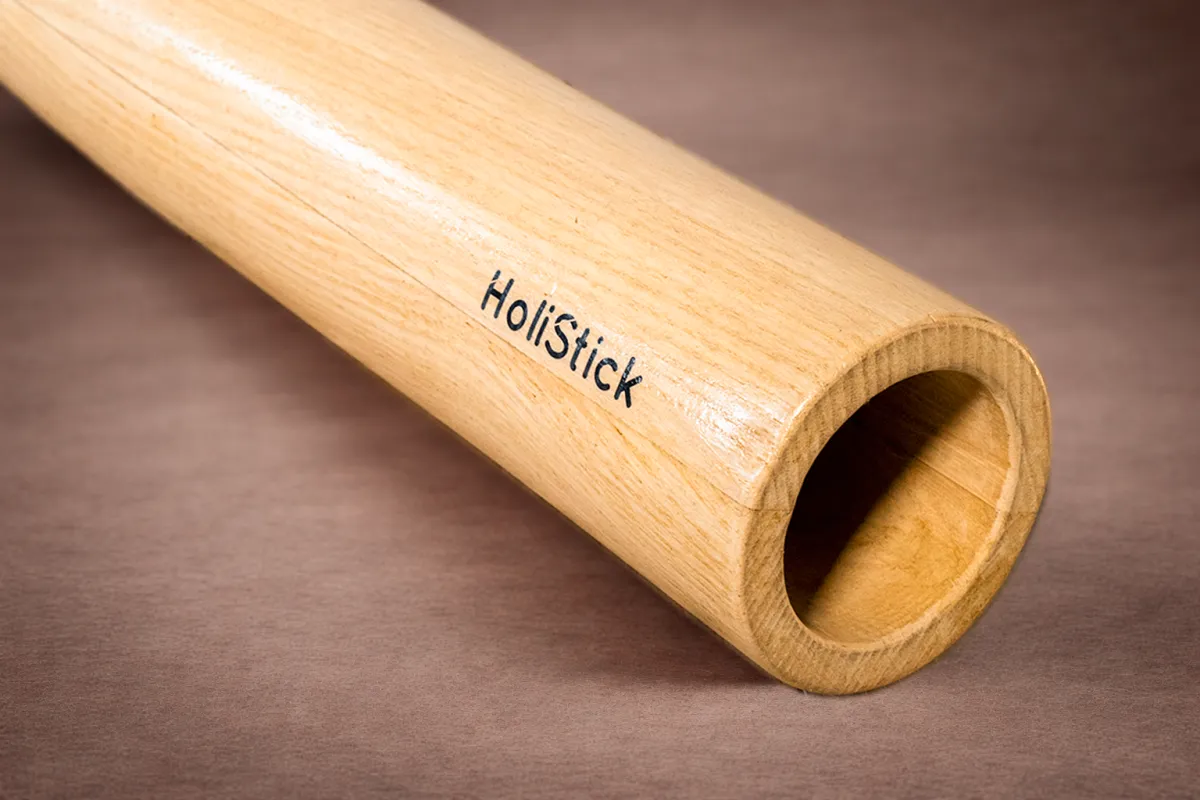
If you already recognize this way of thinking, and you know this is the kind of instrument you’ve been looking for,
you don’t need another explanation.
This is not about believing in effects. It’s about choosing an instrument built on criteria you can stand behind.
The logic HoliStick is built on
What follows is not a list of features. It’s a system. Each element works only because the others are there.

Timbre — and how little you have to fight for it
The first requirement was a low, grounded sound that remains stable under real use. The internal geometry emphasizes low frequencies without sacrificing control. A wide internal diameter supports depth and warmth, while carefully designed transitions preserve playability during long sessions. The instrument does not reward force; it responds to presence. Depth comes without heaviness, and variation remains accessible without instability.
Harmonics are not added — they are allowed to emerge
HoliStick does not chase a specific “frequency”. Its geometry supports a coherent harmonic structure. Through simulation and refinement, intrinsic resonances were aligned to reduce dominant inharmonic components at low frequencies, stabilizing the sound without sterilizing it. What emerges feels natural not because it follows a formula, but because it is consistent.
Materials and aesthetics as part of perception
In a holistic context, how an instrument feels and looks directly affects acceptance and relationship. Materials were chosen to remain neutral over time — tactile, visually calm, predictable in response. The instrument does not draw attention to itself; it leaves space for the session.
Size and handling are constraints, not compromises
A low instrument with a wide internal diameter inevitably grows in size. What matters is not the number, but how it behaves in real conditions: standing, sitting, moving, staying present with someone else.
“In a relational setting, I need the instrument to stay out of the way.
What I appreciated here is that it doesn’t ask for attention.”
Hans-Peter Pelotte, Musician & didgeridoo teacher — Germany
The final dimensions balance mass and usability, supporting the sound without turning the instrument into something you have to manage.
None of these choices aim to make the instrument impressive on its own. They aim to make it reliable when your focus is elsewhere. That is the role HoliStick is designed to play.
This is an instrument designed to be used in real conditions, with real people.
It needs to respond consistently while you move, listen to the person in front of you, and as the session evolves.
It supports you without risking interruptions in the sound.
If this is the kind of behavior you need, then it makes sense to consider it.
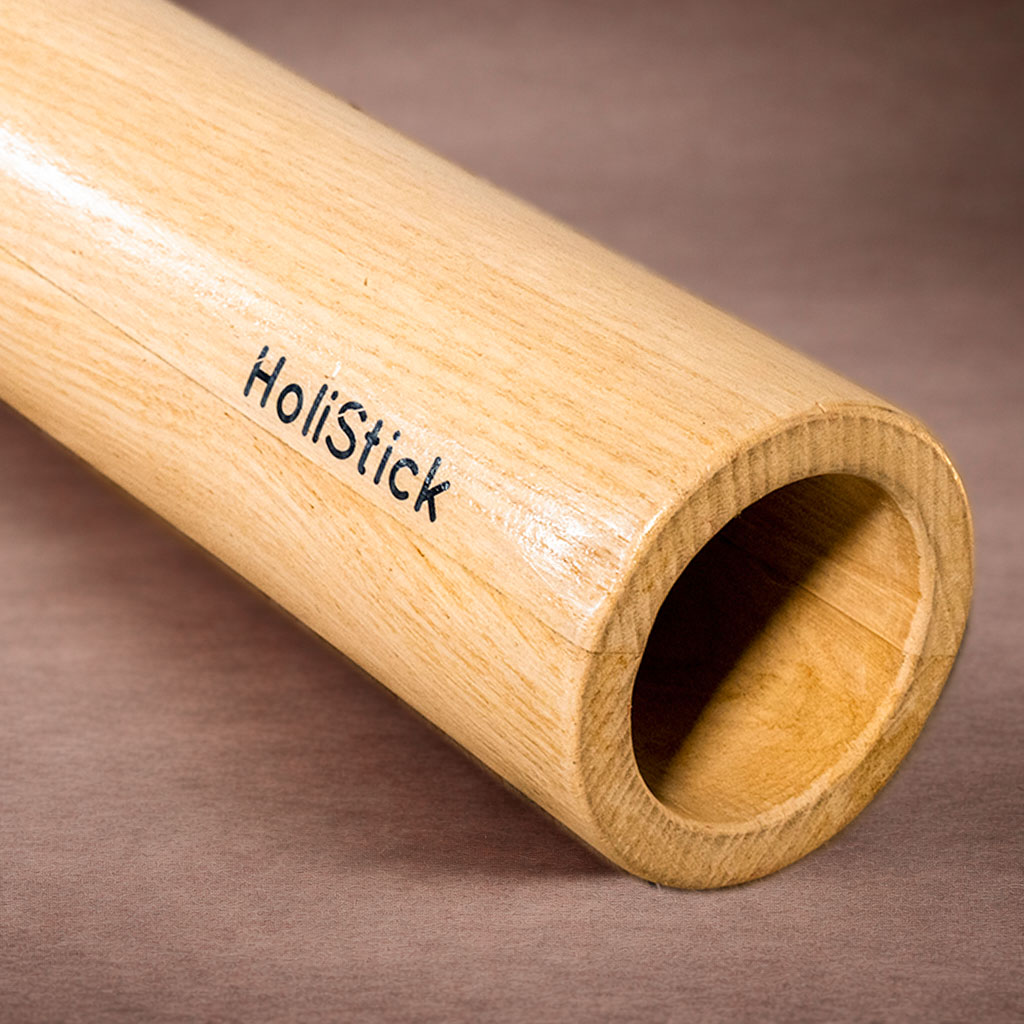
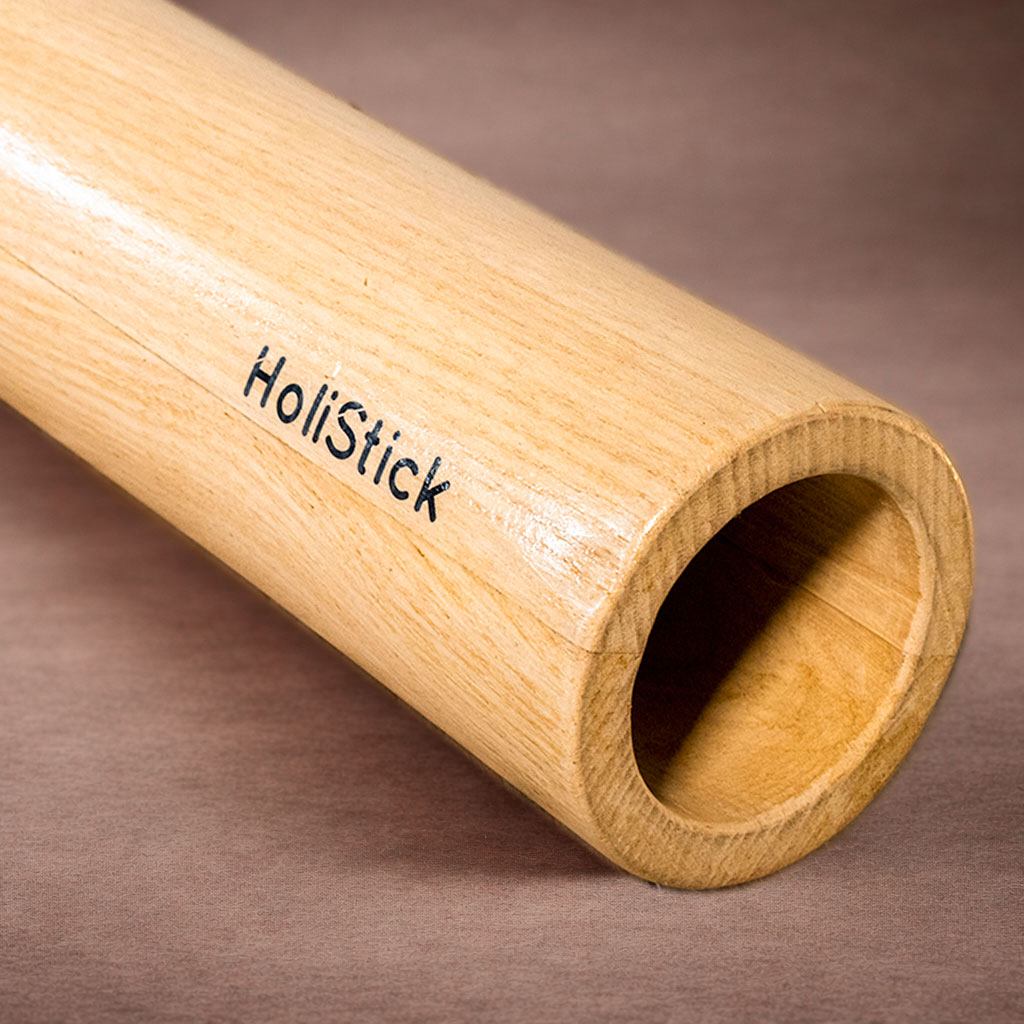
HoliStick
€789.00
Quantity
The first batch sold out in just 12 hours, and the second in 36 hours.
If you miss out on the last available instruments, join the waiting list below!

New instruments will be produced in limited numbers.
Join the WAITING LIST to receive priority notice when the next batch is ready.
By filling out this form, I will receive an email with information about reserving a HoliStick. Submitting the form is not binding.
Location: Regione Montebruno, 2A, GARZIGLIANA TO 10060
Call 338 581 2914
Email: [email protected]
Site: